


Architectural drawings
Plans, elevations, sections and dimensions for flat-roof and pitched-roof roof extensions, including key junction details.
Without the right structural calculations, your project can be delayed or stopped. We make it correct — technically, legally and buildable.
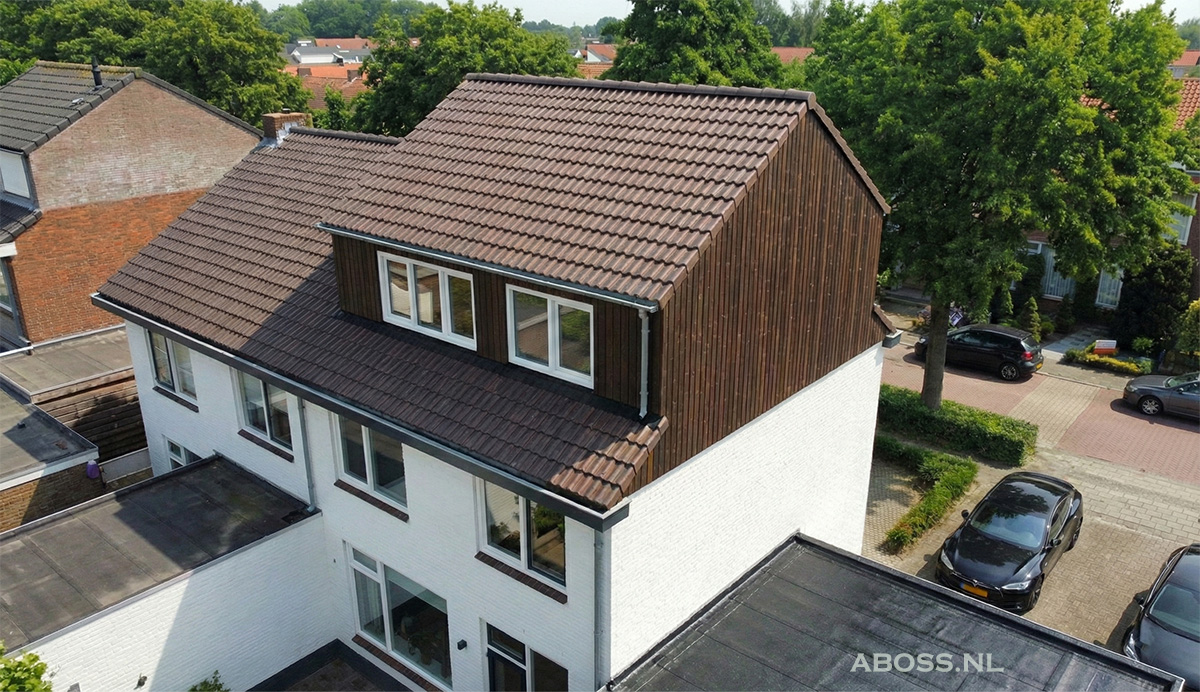
Planning a roof extension in the Netherlands? Whether you choose a prefab roof extension or a fully custom build: the technical and legal foundation determines speed, cost and safety. Aboss acts as your Risk Firewall against rework, cracking, leakage, incomplete submissions and municipal enforcement.
Insufficient structural substantiation → rejection or stop during construction.
Daylight, ventilation or fire safety overlooked → extra rounds with the municipality.
“One-day install” only works with engineering, verified dimensions and junction details.
Aboss delivers a dossier that is assessment-friendly and actually buildable on site.
We provide the technical and legal blueprint for your roof extension. The goal is not “cheap”, but structurally safe, assessable and buildable — so the municipality finds no interpretive gaps.
Plans, elevations, sections and dimensions for flat-roof and pitched-roof roof extensions, including key junction details.
Substantiation for timber, steel, bearings and existing load paths, aligned with Eurocode logic and a realistic construction sequence.
Checks for daylight, ventilation and fire safety, and guidance for the permit application via the Omgevingsloket.
A roof extension is almost always assessed against the local Omgevingsplan and national requirements in the Bbl. Prefab or custom: the municipality expects a technically consistent and buildable dossier.
This helps prevent your application being put on hold, declared incomplete, or a stop-work order during construction due to missing or unrealistic substantiation.
Speed and precision without compromising safety or assessability — built for real municipal review logic.
Review of archive drawings, building typology, load paths and indicative foundation risk.
Your intent, whether prefab model or custom build, translated into a technical package with conditions, details and dimensions.
Structural impact analysis: stability, bearings, openings and load transfer. Goal: reduce settlement and crack risk and prevent failure costs.
We manage completeness and assessability so the dossier is first-time-right for the case officer.
Amsterdam often requires extra attention to design review (welstand), protected streetscapes and heritage values, and the reality of foundation risk. We phrase dossier elements to be directly usable for assessment.
In dense urban areas, neighbour interests and design guidelines can strongly influence approval. We design with the assessment framework upfront to avoid interpretive deadlocks.
Quick extra m² with minimal disruption — if load paths, dimensions, lifting plan and junction details are engineered properly.
Technical solution for limited headroom in a pitched-roof roof extension, including stability and detailing.
Fully finished extra floor with multiple rooms and optimised daylight, including Bbl checks for daylight and ventilation.
Costs vary per building, prefab versus custom, finishing level, logistics and structural interventions. We steer toward a safe and efficient structure to avoid unnecessary steel and rework.
Yes. We can match you with a contractor used to building from a high-quality, permit-ready technical package consisting of drawings, calculations and conditions.
Installation can often be done within 24 hours, but success depends on preparation: detailing, verified dimensions, junction design and structural substantiation.
Yes. Legal requirements do not change with price. Without calculations, the risk is real: rejection or stop-work, insurance issues and potential structural safety concerns.
Avoid costly delays. Use Aboss as your technical and legal firewall for a predictable roof extension process.
Final Authority Test: written to reduce client risk and accelerate municipal assessment using correct terminology.